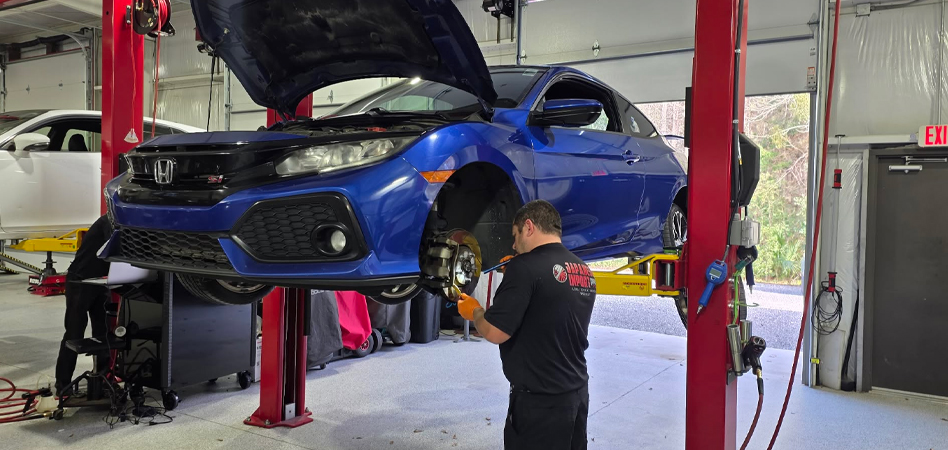
If a maintenance message has appeared on your Honda dashboard, it’s usually not telling you that something has failed. It’s your Honda Maintenance Minder system letting you know that scheduled service is coming due.
The Maintenance Minder is designed to make routine Honda service easier to follow. Instead of relying only on a mileage sticker or a fixed service interval, the system uses information from your vehicle to estimate when maintenance is needed. It may consider factors such as:
- Engine operating conditions
- Trip length
- Temperature
- Mileage
- Driving habits
At Japanese Import Pros, we help Honda owners throughout Charleston, Johns Island, Mount Pleasant, and the surrounding Lowcountry understand what their dashboard messages mean and complete the maintenance their vehicle actually needs.
If you see a maintenance code and aren’t sure what to do next, our team can inspect your Honda, explain the recommended service, and help you plan for it.
How the Honda Maintenance Minder Works
Your Honda’s Maintenance Minder typically displays a message such as:
- Maintenance Due Soon
- Service Due Now
- A wrench icon
- An oil-life percentage
- A main maintenance code, such as A or B
- One or more sub-codes, such as 1, 2, 3, 4, 5, 6, or 7
The oil-life percentage is often the first thing drivers notice. When it reaches 15%, the vehicle may display a maintenance reminder. At 5%, service is due soon. At 0%, the system is telling you that the recommended service interval has arrived.
That percentage does not necessarily mean your engine has no oil remaining. It’s an estimate of the useful life of the oil based on how your vehicle has been driven. Still, once the Maintenance Minder says service is due, it’s a good time to schedule an appointment.
Honda Maintenance Minder Main Codes
The main code generally identifies the type of oil service your Honda needs.
Code A: Replace Engine Oil
Code A means your Honda is due for an engine oil and oil filter service. This is often the more basic routine maintenance visit.
During an oil service, it is also a good time to check fluid levels, inspect for leaks, review tire condition, and look for signs of developing issues.
Code B: Replace Engine Oil and Inspect Key Systems
Code B includes an engine oil and filter change, along with a more thorough inspection. Depending on the model and service requirements, this typically includes looking at:
- Front and rear brakes
- Suspension components
- Steering components
- Exhaust system
- Fluid levels and condition
- Parking brake adjustment
- Brake lines and hoses
- Underbody condition
A Code B service is an opportunity to catch worn items before they become larger repairs. For example, identifying a small fluid leak, thinning brake pads, or worn suspension components early can be far less expensive than waiting for a breakdown or safety concern.
Honda Maintenance Minder Sub-Codes
Your Honda may show a main code along with one or more sub-codes. These tell you what additional maintenance is due.
Code 1: Rotate Tires
This code means your tires should be rotated. Regular rotation helps tires wear more evenly and can extend tire life. It also allows a technician to inspect tread depth, tire pressure, uneven wear, and signs of alignment or suspension problems.
Code 2: Replace Engine and Cabin Air Filters
This code typically calls for replacement of the engine air filter and cabin air filter.
The engine air filter helps protect the engine from dirt and debris. The cabin filter helps improve the air entering your Honda’s ventilation system. In Charleston’s humid climate, a neglected cabin filter can also contribute to reduced airflow and unpleasant odors from the air conditioning system.
Code 3: Replace Transmission Fluid
Honda transmission service is important because the correct fluid and service procedure matter. Delaying transmission fluid service can contribute to shifting concerns, heat buildup, and unnecessary wear.
Not every Honda has the same transmission design, so it’s important to follow the appropriate recommendation for your specific model, year, and drivetrain.
Code 4: Replace Spark Plugs and Related Components
Code 4 generally includes spark plug replacement and may also include a timing belt inspection or replacement on applicable Honda engines. It can also involve inspection of the valve clearance condition, depending on the vehicle.
This is a major scheduled maintenance milestone on many Honda models. If your Honda has a timing belt, replacing it on schedule is especially important. A failed timing belt can cause severe engine damage on certain engines.
Code 5: Replace Engine Coolant
Coolant helps regulate engine temperature and protects the cooling system from corrosion. Over time, coolant loses its protective properties. Replacing it at the recommended interval helps protect the radiator, water pump, hoses, heater core, and engine.
Code 6: Replace Rear Differential Fluid
This code is common on applicable all-wheel-drive Honda models. Fresh differential fluid helps protect the components that transfer power to the rear wheels. If you drive a Honda CR-V, Pilot, Passport, Ridgeline, or another AWD model, staying current on drivetrain fluid service is important.
Code 7: Replace Brake Fluid
Brake fluid absorbs moisture over time. In a humid coastal environment like Charleston, South Carolina, checking and replacing brake fluid at the proper interval matters even more. Old brake fluid can contribute to internal corrosion and reduced braking system performance.
Do You Have to Follow the Maintenance Minder Exactly?
The Maintenance Minder is a useful guide, but it should be considered alongside your vehicle’s age, mileage, maintenance history, and current condition.
For example, a vehicle that is driven mostly on short trips, spends time idling in traffic, tows regularly, or sits unused for extended periods may need attention that does not line up perfectly with the dashboard display. Likewise, a recently purchased used Honda may need a baseline inspection if its service history is incomplete.
The best approach is simple: use the Maintenance Minder as a prompt to schedule service, then have the vehicle inspected by a shop familiar with Honda maintenance requirements.
What Happens If You Ignore a Maintenance Minder Message?
Ignoring a maintenance reminder doesn’t always cause an immediate problem, but it can lead to avoidable wear over time.
Putting off oil changes can affect engine protection. Delaying transmission, brake, coolant, or differential fluid service can shorten the life of expensive components. Ignoring tire rotation can lead to uneven wear and reduce tire life. Skipping inspections can allow a small leak, worn brake component, or suspension issue to become a bigger repair.
Routine maintenance is usually less expensive and less disruptive than emergency repair. It also helps preserve reliability, resale value, fuel efficiency, and driving confidence.
Reliable Honda Maintenance in Charleston, SC
Japanese Import Pros provides Honda maintenance, diagnostics, inspections, and repairs for drivers throughout the Greater Charleston area. Our team understands Honda service requirements and can help you make sense of dashboard reminders without pushing unnecessary work.
If your Honda shows a wrench light, an oil-life reminder, or a Maintenance Minder code, schedule an appointment with Japanese Import Pros. We’ll review the code, inspect your vehicle, and provide clear recommendations based on what your Honda needs.
Frequently Asked Questions
Usually, yes, but you should schedule service soon. A maintenance reminder is different from a warning light indicating an active system fault. If you also see a red warning light, overheating warning, or oil pressure light, or experience a major performance issue, stop driving and have the vehicle evaluated promptly.
It means your Honda is approaching its recommended oil-service interval. It’s a good time to schedule an appointment. At 5% or 0%, service should be completed as soon as practical.
You may be able to reset the reminder through the vehicle menu, but it should only be reset after the required maintenance has been completed. Resetting it without performing service can make it easier to lose track of important maintenance intervals.
Not always. It tracks scheduled maintenance needs, but it does not replace inspections for leaks, worn tires, brake wear, suspension concerns, battery condition, or unexpected warning lights.